Replacement Value or Actual Cash Value

Do you have Replacement Value or Actual Cash Value? This is an important question that needs to asked when determining which insurance program is right for you.

ConfusionReplacement Value Insurance means that if your covered item is destroyed you will be paid the amount of money it takes to replace that item with a brand new item. There are a few caveats in each policy and you must subtract your deductible, but this is a good definition of Replacement Value.

Actual Cash Value Insurance (ACV) means that if your covered item is destroyed you will be paid the value of that item at the time of the occurrence. If your item is 10 years old the item will be depreciated accordingly and you will be paid the cash value of that item minus your deductible.

Here are two examples.

Your roof blows off of your house in a bad storm. You get an estimate of $15,000 to replace your roof.Limestone Tornado Damage
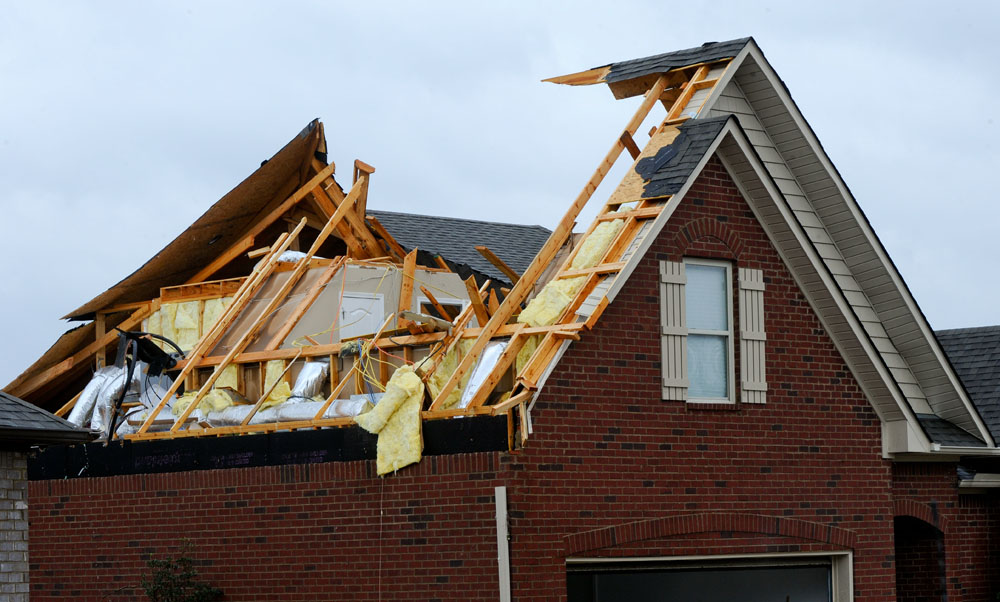
If you have Replacement Value Insurance with a $1,000 deductible the insurance company would pay the roofing contractor $14,000 and you would pay $1,000, the amount of your deductible.

If you have ACV with a $1,000 deductible the insurance company would then do some calculations to determine the value of your roof at the time of the occurrence. If your roof is 8 years old, they would depreciate the value of your roof by 8 years. They may determine that the cash value of your roof to be $11,000. The insurance company would then pay the roofing contractor $10,000 ($11,000 minus your deductible of $1,000), and you would pay the roofing contractor the remaining $5,000.

Here’s another example

Missing RoofIn that same scenario of the roof blowing off of your home, you have nearly all of your personal property damaged by rain water, hail damage, and wind.

If you have Replacement Value Insurance on your personal property the insurance company would calculate how much it would cost to replace the damaged personal property with new personal property of the same kind. If they determine that it is $100,000, you would be paid out that amount to replace your personal property. In this case the deductible was already paid through the roofing contractor.

If you have ACV on your personal propertyConcerned Woman the insurance company would then do some calculations to determine the cash value of your personal property at the time of the occurrence. You may only get $200 for your 10 year old couch, even though a new couch may cost $1,200. They may determine that your personal property had a cash value of $25,000 at the time of the occurrence. You would be paid out that amount to replace your personal property. Your deductible was already paid through the roofing contractor.

Summarizing these 2 example; if you had Replacement Value Insurance your insurance company would have paid out $114,000 (replacement of the roof and your personal property) and you would have had to pay out $1,000 (the amount of your deductible); and if you had ACV your insurance company would have paid out $35,000 (the ACV of the roof and your personal property minus your deductible) and you would have had to pay out $80,000 to replace your roof and personal property.

new roofReplacement Value Insurance cost about 10% more than ACV and there are some situation where ACV is called for. Some risks may not be eligible for Replacement Value Insurance because of the condition of the property, or the nature of the risk.

There are changes taking place in the insurance industry right now that you need to be aware of.  Some companies are changing the way that they pay out claims from what they may have done in the past. I am seeing deductibles increasing and policies that once had Replacement Value Insurance getting changed to ACV. Many HO3 polices have Replacement Value on the home but ACV on the personal property. Do you know what you have? logo3696786_mdIf you are unsure, contact your agent right away.

You can also contact Bragg Insurance Agency at 317-758-5828 for a free no obligation review of any of your insurance policies.

Be on the Alert for Deer

My favorite time of year is Harvest Season. I love the cooler weather, wonderful colors, fall parties, and watching the farmers in their fields. Fall is also deer season…not just deer hunting season, but also “watch out for that deer” season.White-tailed_deer

As the corn and beans grow during the summer deer can easily move from woods to woods without being detected and with very little human interaction, but when it’s time to cut beans or pick the corn that all changes. Grain farmer will confirm that they lose crops every year from deer who feed on the corn and beans.

When the harvest starts and combines go into the fields, deer sometimes freak out! They run, and sometimes they run right into a car.

To compound the issue bow hunting season starts (this year on October 1st) and then shot gun hunting season (this year on November LargerDrawnBow16th.)  Deer are constantly on the move, trying to avoid tractors, combines, and hunters.

Deer are also nocturnal and with our diminishing daylight hours they are much more active in the fall and winter months. Nearly 50% of all deer related accidents happen between the months of October and December.

According to the National Highway Traffic Safety Administration about 1 million car accidents each year are a caused by deer / vehicle collisions. These collisions kill about 200 people each year (not to mention a lot of deer). The accidents cause about 10,000 personal injuries and cost about $1 billion in property damage.

If you’re from Indiana, I don’t have to tell you that hitting a deer can cause a lot of damage and even death.   In fact, I will bet you have either hit a deer yourself, or personally know someone who has.

What can you do to protect yourself?deer-and-car_100324859_m

1. Be on Alert! Especially at dawn and dusk, this is when deer are on the move. Also be aware of your surroundings. Are you driving in a rural area where deer are more likely to be seen? Are there farmers in the fields?

2. Watch your speed. If you are in an area and/or at a time where deer are likely to be seen, take your foot off the accelerator and slow down.

3. Use your high beams. Look for deer in the headlights.

4. If you see one deer there are likely to be more and take precautions.

5. Don’t swerve. This may cause you to lose control and hit another vehicle or lose control of your vehicle.

6. Wear your seat belt! Many deaths and injuries are a result of being thrown through the windshield. Seat belts save lives.

When is the Right Time to Purchase Life Insurance?

Unfortunately none of us are going to get out of this life alive, and some of us will even die prematurely. That’s why it is so important to have the proper life insurance in place at the proper time in your life.College_graduate_students_620x350

Life has many transitional stages, and it’s these stages that should prompt you to step back for a moment and reflect on how your untimely death would affect those around you.

Some of these transitions in life include: graduating from high school, or college; marriage; buying a home; the arrival of children; a career change; Retirement Planning, and Final Expense Planning.

Graduating college students may need a $50,000 10 year term life policy to help cover the student loans. Especially if mom and dad cosigned the loans!

Newlywed couples buying their first home may need a $250,000 30 year term policy to cover the mortgage in case anything happens to the primary bread winner.

071The birth of your first child may be the perfect time to review life insurance options. Maybe for the first time you are now responsible for the care and protection of a dependent. A life insurance policy can give you that peace of mind of knowing that if you can’ t be there the child’s needs will still be provided for.

Couples planning for retirement may want to purchase an Indexed Universal Life Insurance Policy (IUL) because of the tax benefits that it provides. An IUL is also an excellent investment vehicle while it provides coverage for an unexpected death.

Life insurance shouldn’t be viewed as a product that you purchase once and then forget it. Different stages of your life require different types of life insurance. If you haven’t done so, call your agent today and schedule a time to review your life insurance needs. You will be glad that you did.

The Umbrella Policy

What if the unthinkable happened to you?  You were the cause of a major accident that caused death or serious injury.  Would your insurance liability coverage be enough to cover the injured parties expenses, and protect your from financial ruin?Auto%20Accident%20C

For the vast majority of people the answer is “No”, but the umbrella policy can help you change that.

The umbrella policy starts at $1,000,000 in liability coverage and it covers your excess liability over your auto and homeowners insurance limits.

This means that if you auto insurance liability limit is $250,000 per person; with the umbrella policy in place you will then have $1.25 Million in liability coverage.  If your homeowner’s liability limit is $500,000; with the umbrella policy in place you will then have $1.5 Million in liability coverage.

Do you really need that much coverage?

If you are the cause of a serious accident you will suddenly be thrust into a “perfect storm” of financial ruin.  The combination of high medical expenses, attorney’s fees, and a “sue happy” society could cost you’re your life’s savings, future earnings, and equity that you have built in your home.

How much does it cost? 

Fortunately this type of coverage it is very affordable.  It varies from person to person, but I typically see a premium range of $200 to $300 per year.  $25 per month is not a lot of money to protect everything that you’ve worked for your whole life, especially in light of how much we spend for gas, cable TV, and dining out.

Yellow HouseWho needs an Umbrella Policy?

As an agent it is vitally important that I get to know my clients as best as possible.  This helps to recognize different risks associated with their occupation, hobbies, and life style.

I recommend this coverage to all of my clients, but I strongly recommend this coverage to people who have occupations that make them more susceptible to law suits, such as people who work with children.  It is my opinion that every teacher, Sunday school teacher, bus driver, day care worker, and little league coach have the umbrella policy as part of their insurance portfolio.Brian Bragg compressed

I also strongly recommend this coverage to people that have money that they want to protect.  Equity in homes, savings accounts, retirement accounts, future earnings, and other assets are all at risk when there is a serious accident.

For more information on the umbrella policy or to review your coverages, contact Bragg Insurance Agency.

10 Ways to Save Money on Your Insurance

1. Match your coverages to your specific needs. Insurance is not one size fits all. Have your agent explain each and every coverage that you are paying for. Use this information to help determine if your coverage fits your circumstances.

2. Insist on Annual Reviews with your Agent. As your life changes from year to year so does your insurance needs. Visiting your insurance agent and reviewing your coverages along with your costs is an excellent way of staying informed and keeping your costs down.Insurance Agent

3. Comparison shop. Each insurance company use different risk models to determine your annual premium. Your risks will change from year to year along with insurance companies risk models. Have your local independent agent shop different carriers for you each year at renewal time.

4. Bundle your coverages. Most insurance companies give big discounts for having all of your insurance with one carrier. Most people know about the home and auto discount, but did you know that some carriers offer extra discounts for having life insurance or an umbrella policy with them?

5. Increase your deductible.  It’s not an uncommon thing for me to see an auto policy where the person has never had a claim but yet has a zero deductible. This is like paying the insurance company a bonus for never filing a claim. Self-insure yourself for as much as you can comfortably afford.good-credit-vs-bad-credit

6. Maintain good credit. I don’t necessarily agree with the practice, but insurance companies today are using your credit score as a way of determining the likelihood of you filing a claim. Keep your credit in good order and this will help to keep your insurance costs down.

7. Safety Safety Safety. Insurance companies give discounts for safety devices and features. Safety features and ratings with vehicles can reduce your auto insurance premium. Smoke detectors, CO2 detectors, and Burglar alarms can help to lower your homeowner’s insurance premiums.

8. Low Mileage Savings. Your auto insurance rates are partially based on the distance that you drive your vehicle each year. Check with your local independent agent to make sure that they have your correct annual driving miles.

going-paperless
9. Go Paperless. Many companies offer a paperless discount. Instead of mailing you mounds of paperwork, they email them to you.

10. Senior Discounts. The older we get the less risks we tend to take which may not be real exciting, but it can lead to savings on our insurance. Most companies offer some type of senior discount, call you agent and find out when you can take advantage of this discount.